Abstract
Background: Male involvement in family planning (FP) is crucial for improving reproductive health outcomes, yet participation remains low in many Sub-Saharan African countries, including Rwanda. This study assessed the level of male involvement and identified health service-related barriers to FP service utilization among men in Musanze District, Northern Rwanda. Methods: A community-based cross-sectional study was conducted among 397 married men aged 21 and above in Musanze District. Participants were selected using simple random sampling. Data were collected through pre-tested, interview-administered questionnaires. Multivariable logistic regression analysis was used to identify health service-related factors associated with male involvement in FP. Results: The overall level of male involvement in FP services was low, at 36.7%. After adjusting for other variables, distance to a health facility was significantly associated with involvement. Men living more than 5 km from an FP service delivery point had 93% lower odds of being highly involved in FP compared to those living within 5 km (Adjusted Odds Ratio [AOR] = 0.071; 95% CI: 0.009-0.579). Conclusion: Male involvement in FP services in Musanze district is low, with geographic distance to facilities being a major health service barrier. Interventions to increase male participation should include strategies to improve physical access to FP services, such as community-based service delivery and mobile clinics.
|
Published in
|
American Journal of Health Research (Volume 13, Issue 6)
|
|
DOI
|
10.11648/j.ajhr.20251306.12
|
|
Page(s)
|
301-307 |
|
Creative Commons
|

This is an Open Access article, distributed under the terms of the Creative Commons Attribution 4.0 International License (http://creativecommons.org/licenses/by/4.0/), which permits unrestricted use, distribution and reproduction in any medium or format, provided the original work is properly cited.
|
|
Copyright
|
Copyright © The Author(s), 2025. Published by Science Publishing Group
|
Keywords
Male Involvement, Family Planning Services, Health Service Barriers, Musanze District, Rwanda
1. Introduction
Family planning (FP) enables individuals and couples to control the number and timing of their children through contraceptive methods, fertility treatments, and reproductive health education
| [1] | United Nations Department of Economic and Social Affairs. World Family Planning 2022: Meeting the Changing Needs for Family Planning: Contraceptive Use by Age and Method. Erscheinungsort Nicht Ermittelbar: United Nations; 2023. |
[1]
. Despite its importance, low utilization of FP remains a significant global public health challenge. In developing countries, this is exacerbated by inadequate healthcare infrastructure, limited contraceptive availability, and insufficient reproductive health education, often compounded by cultural and religious beliefs
| [2] | Coulson J, Sharma V, Wen H. Understanding the global dynamics of continuing unmet need for family planning and unintended pregnancy. China Popul Dev Stud 2023; 7: 1-14. https://doi.org/10.1007/s42379-023-00130-7 |
[2]
.
Globally in 2019, 190 million women of reproductive age had an unmet need for modern contraception, with the disparity most pronounced in Sub-Saharan Africa
| [3] | Kraft JM, Serbanescu F, Schmitz MM, Mwanshemele Y, Ruiz C. AG, Maro G, et al. Factors Associated with Contraceptive Use in Sub-Saharan Africa. J Womens Health 2022; 31: 447-57. https://doi.org/10.1089/jwh.2020.8984 |
[3]
.
Traditionally, FP programs have focused predominantly on women, leading to limited male engagement in decision-making and service utilization. However, evidence shows that active male participation is critical for equitable and effective FP outcomes. In many African contexts, men are primary decision-makers, and their approval is often required for women to access contraceptive services
| [4] | Wondim G, Degu G, Teka Y, Diress G. Male Involvement in Family Planning Utilization and Associated Factors in Womberma District, Northern Ethiopia: Community-Based Cross-Sectional Study. Open Access J Contracept 2020; Volume 11: 197-207.
https://doi.org/10.2147/OAJC.S287159 |
[4]
. Male involvement in FP extends beyond condom use and vasectomy to include supporting partners, advocating within communities, and engaging in policy dialogue
| [5] | Manortey S, Missah K. Determinants of Male Involvement in Family Planning Services: A Case Study in the Tema Metropolis, Ghana. OALib 2020; 07: 1-21.
https://doi.org/10.4236/oalib.1106043 |
| [6] | Mulatu T, Sintayehu Y, Dessie Y, Dheresa M. Male involvement in family planning use and associated factors among currently married men in rural Eastern Ethiopia. SAGE Open Med 2022; 10: 20503121221094178.
https://doi.org/10.1177/20503121221094178 |
[5, 6]
. Engaging men in FP has the potential to improve contraceptive uptake, reduce unmet need, and prevent an estimated 830 maternal deaths daily in sub-Saharan Africa
| [7] | Nkwonta, Messias. Male Participation in Reproductive Health Interventions in Sub-Saharan Africa: A Scoping Review. Int Perspect Sex Reprod Health 2019; 45: 71.
https://doi.org/10.1363/45e8119 |
[7]
. Furthermore, it is a contributing factor to low contraceptive usage and a high unmet need for FP in Africa. It can potentially reduce maternal mortality by 32% and child mortality by 10%
| [4] | Wondim G, Degu G, Teka Y, Diress G. Male Involvement in Family Planning Utilization and Associated Factors in Womberma District, Northern Ethiopia: Community-Based Cross-Sectional Study. Open Access J Contracept 2020; Volume 11: 197-207.
https://doi.org/10.2147/OAJC.S287159 |
[4]
.
Despite policy initiatives, male participation remains low across much of Sub-Saharan Africa. A study in Ethiopia found only 12.5% of men were involved in FP, citing reasons such as lack of knowledge, fear of side effects, desire for more children, and cultural prohibitions
| [4] | Wondim G, Degu G, Teka Y, Diress G. Male Involvement in Family Planning Utilization and Associated Factors in Womberma District, Northern Ethiopia: Community-Based Cross-Sectional Study. Open Access J Contracept 2020; Volume 11: 197-207.
https://doi.org/10.2147/OAJC.S287159 |
[4]
. Strengthening male participation is essential for achieving Sustainable Development Goal 3 of reducing maternal mortality.
A study conducted in Uganda revealed that men’s active participation in family planning (FP) services enhances women’s motivation to adopt, use, and maintain contraceptive methods. The findings showed that 34.0% of women experienced low partner involvement in FP, 80.6% believed that discussing FP with their partners positively influenced their contraceptive practices, and 93.5% acknowledged that men play a significant role in family planning
| [8] | Wambete SN, Baru A, Serwaa D, Dzantor EK, Poku-Agyemang E, Kukeba MW, et al. Attitude of reproductive age women towards male involvement in family planning; a community-based cross-sectional study in Nakawa Division, Kampala, Uganda 2022.
https://doi.org/10.1101/2022.07.14.22277630 |
[8]
. Therefore, it is essential to ensure the continuous involvement of men in family planning services.
In Rwanda, the government has positioned FP as a cornerstone of poverty reduction and socioeconomic development
| [9] | Ndayishimiye C. Women’s Perceptions and Attitudes toward Family Planning and Its Barriers in Poor Rural Settings: Advancing Rwanda’s Family Planning Policy. In: Donmez DrS, editor. New Horiz. Med. Med. Res. Vol 7, Book Publisher International (a part of SCIENCEDOMAIN International); 2022, p. 1-11. https://doi.org/10.9734/bpi/nhmmr/v7/2131A |
[9]
. Strategies include training providers, mass media campaigns, and strengthening contraceptive supply chains
| [10] | Schwandt H, Boulware A, Corey J, Herrera A, Hudler E, Imbabazi C, et al. An examination of the barriers to and benefits from collaborative couple contraceptive use in Rwanda. Reprod Health 2021; 18: 82.
https://doi.org/10.1186/s12978-021-01135-6 |
[10]
. However, according to the 2019-2020 Rwanda Demographic and Health Survey (RDHS), contraceptive use among married women stands at 64%, with a 30% discontinuation rate within the first year and a 14% unmet need for FP
| [11] | NISR. National Institute of Statistics of Rwanda, Rwanda Demographic and Health Survey 2019-20 Key Indicators Report. 2020. |
[11]
. This highlights a persistent gap that male involvement could help address.
In Musanze district, male engagement in maternal and child health services, including FP, remains low. Prior research indicates that men often perceive these services as a woman's responsibility and are deterred by factors such as encountering acquaintances at health facilities, negative staff attitudes, long waiting times, and lack of dedicated spaces for men
| [12] | Karamage E. Men Engagement in Maternal and Child Health Care services in Musanze district. 2016. |
[12]
.
Failure to engage men in FP can lead to serious consequences, including sustained high unmet need and contraceptive discontinuation, even when women are motivated to use FP methods
| [9] | Ndayishimiye C. Women’s Perceptions and Attitudes toward Family Planning and Its Barriers in Poor Rural Settings: Advancing Rwanda’s Family Planning Policy. In: Donmez DrS, editor. New Horiz. Med. Med. Res. Vol 7, Book Publisher International (a part of SCIENCEDOMAIN International); 2022, p. 1-11. https://doi.org/10.9734/bpi/nhmmr/v7/2131A |
[9]
. However, access to FP services among men is limited due to various health services-related barriers that have not been identified. This study aimed to document the current level of male involvement in FP and identify specific health service-related barriers affecting their participation in Musanze District, Northern Rwanda.
2. Materials and Methods
2.1. Study Design, Setting, and Period
A cross-sectional study was conducted from August to December 2023 in the Musanze district, Northern Province, Rwanda. Musanze has a population of 476,522, with 74,801 men aged 21 years and above
| [13] | NISR. National Institute of Statistics of Rwanda (NISR) Fifth Rwanda Population and housing Census, Thematic Report Population Size, Structure, and Spatial Distribution, July 2023. vol. 7. 2023. |
[13]
. The district was selected due to its low contraceptive prevalence rate (70%, the third lowest in the Northern Province) and a high total fertility rate (3.5 children)
| [11] | NISR. National Institute of Statistics of Rwanda, Rwanda Demographic and Health Survey 2019-20 Key Indicators Report. 2020. |
[11]
.
2.2. Population and Eligibility Criteria
The study targeted married men aged 21 and older residing in Musanze District with female partners of reproductive age (15-49 years). Men in this demographic are typically in stable relationships and actively involved in reproductive decisions. Inclusion criteria were: voluntary consent, being a married man aged ≥21, having a partner of reproductive age, and residence in Musanze District. Exclusion criteria included refusal to participate, communication or hearing impairments, reported infertility, or having a partner outside the reproductive age range.
2.3. Sample Size Determination
The sample size was determined using Slovin’s Formula
According to the Musanze District Profile published by the National Institute of Statistics of Rwanda (NISR, 2023), the estimated number of males aged 21 years and above is 74,801. Given this study population (N = 74,801), and using a 95% confidence level with a 0.05 margin of error, the sample size is calculated as follows:
=397
2.4. Sampling Procedure
Three of the district's 15 sectors (one urban, two rural) were purposively selected based on the researcher's logistical capacity and geographical representation. A simple random sampling method was employed. All eligible men in the selected sectors were assigned a unique identifier, and 397 participants were selected using a random number generator in the R statistical software package.
2.5. Study Variables and Measurements
The primary outcome variable was male involvement in FP services, categorized as
high or
low. This was computed from six 'Yes' or 'No' questions assessing: men's personal use of FP methods, accompanying a partner to an FP facility, discussing FP with a partner, approving the partner's use of FP, providing support to access FP services, and encouraging FP use. A summative score was calculated; men scoring 0-3 were classified as having 'low involvement,' and those scoring 4-6 as 'high involvement,' consistent with prior research
| [4] | Wondim G, Degu G, Teka Y, Diress G. Male Involvement in Family Planning Utilization and Associated Factors in Womberma District, Northern Ethiopia: Community-Based Cross-Sectional Study. Open Access J Contracept 2020; Volume 11: 197-207.
https://doi.org/10.2147/OAJC.S287159 |
| [5] | Manortey S, Missah K. Determinants of Male Involvement in Family Planning Services: A Case Study in the Tema Metropolis, Ghana. OALib 2020; 07: 1-21.
https://doi.org/10.4236/oalib.1106043 |
[4, 5]
. Predictor variables related to health services included: distance to FP facility (≤5 km vs. >5 km), fear of side effects (Yes/No), and availability of FP in the community (Yes/No).
2.6. Data Collection Procedure
A structured questionnaire, adapted from previous studies
| [14] | Amuzie CI, Nwamoh UN, Ukegbu A, Umeokonkwo CD, Azuogu BN, Agbo UO, et al. Determinants of male involvement in family planning services in Abia State, Southeast Nigeria. Contracept Reprod Med 2022; 7: 15.
https://doi.org/10.1186/s40834-022-00182-z |
| [15] | Fedrick FD. Factors influencing male involvement in the utilisation of family planning in Chato district, Geita region, Tanzania 2019: 158. |
[14, 15]
, was used. It was translated into Kinyarwanda and included closed and semi-closed questions. The tool was pre-tested on 10% of the sample (n=40) in the Kinigi sector (excluded from the main study) to check for clarity, reliability, and validity. Feedback from academic supervisors and the pre-test led to minor refinements.
2.7. Data Analysis
Data were analyzed using Stata version 18. Descriptive statistics (frequencies, percentages, means, and standard deviations) summarized sociodemographic characteristics. A multivariable logistic regression model was used to identify factors associated with male involvement, reporting Adjusted Odds Ratios (AORs) with 95% Confidence Intervals (CIs). A p-value of < 0.05 was considered statistically significant.
2.8. Ethical Consideration
Ethical approval was obtained from Mount Kenya University's Ethical Review Committee (Ref: MKU/04/PGS&R/0927/2023). Permission was secured from Musanze district administration and local leaders. Written informed consent was obtained from all participants after explaining the study's purpose, risks, and benefits. Confidentiality was maintained by not recording names, securing questionnaires, and using password-protected computers for data storage.
3. Result
3.1. Demographic Characteristics of Respondents
The mean age of the 397 respondents was 38.1 years (SD=7.8). The largest age group was 32-42 years (44.8%). Nearly half (46.1%) had secondary education, and 57.4% were in informal (illegal) marriages. Just over half (51.4%) were employed, and the vast majority (93.5%) had between 0-5 living children (
Table 1).
Table 1. Sociodemographic characteristics of the respondents (n=397).
Variables | Frequency (n=397) | Percent (%) |
Age group | | |
21-31 | 95 | 23.9 |
32-42 | 178 | 44.8 |
43-53 | 109 | 27.5 |
54-64 | 15 | 3.8 |
Education Level | | |
No education | 44 | 11.1 |
Primary | 122 | 30.7 |
Secondary | 183 | 46.1 |
University | 48 | 12.1 |
Religion | | |
Catholic | 188 | 47.4 |
Other Christian | 103 | 25.9 |
Adventist | 82 | 20.7 |
Muslim | 24 | 6.1 |
Marital status | | |
Informally married | 228 | 57.4 |
Legally married | 169 | 42.6 |
Employment status | | |
Employed | 193 | 48.6 |
Unemployed | 204 | 51.4 |
Number of living children | | |
0-5 | 371 | 93.5 |
6-10 | 26 | 6.6 |
3.2. Level of Male Involvement in FP Services Utilization
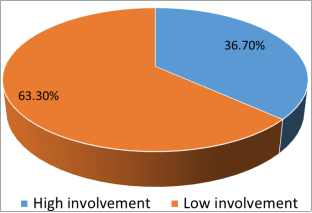
The study found that overall male involvement in FP services was low, at 36.7% (
Figure 1).
Figure 1. Level of Male Involvement in FP Services Utilization.
3.3. Health Services-related Barriers and Male Involvement
Bivariate analysis showed significant associations between male involvement and both distance to a health facility (p=0.0004) and fear of side effects (p=0.0136). No significant association was found with the availability of FP in the community (p=0.1029) (
Table 2).
Table 2. Health services-related barriers and male Involvement in FP services Utilization.
Variables | Male Involvement in FP | Chi-square | P-value |
Low | High |
Distance to a health facility | | | 12.33 | 0.0004 |
Very close (less than 5 km) | 227 | 145 |
Very far (more than 5 km) | 24 | 1 |
Fear of side effects | | | | |
Yes | 9 | 14 | 6.10 | 0.0136 |
No | 242 | 132 |
Availability of FP in the community | | | | |
Yes | 12 | 133 | 2.26 | 0.1029 |
No | 239 | 13 |
Key: Statistically significant difference means (P<0.005)
Source: Primary Data, 2024
3.4. Multivariable Analysis of Factors Associated with Male Involvement
In the multivariable logistic regression model, only distance to a health facility remained significantly associated with male involvement after adjusting for other variables. Men living more than 5 km from an FP facility had 93% lower odds of being highly involved compared to those living within 5 km (AOR = 0.071; 95% CI: 0.009-0.579). Fear of side effects and availability of FP in the community were not statistically significant in the adjusted model (
Table 3).
Table 3. Multivariable analysis of factors associated with male involvement in FP.
Variable | Male involvement | P-value | Odds Ratio | Sig |
Low f (%) | High f (%) | AOR (95% CI) |
Distance to a health facility | | | | | |
Less than 5 km | 227 (90.44%) | 145(99.32%) | | Ref | |
More than 5 km | 24 (9.56%) | 1(0.68%) | 0.013 | 0.071(0.009-0.579) | ** |
Fear of side effects | | | | | |
Yes | 9(3.59%) | 14(9.59%) | 0.087 | 3.444(0.835-14.202) | |
No | 242(96.41%) | 132(90.41%) | | Ref | |
Availability of FP in the community | | | | | |
Yes | 12(4.78%) | 13(8.9%) | 0.904 | 0.916(0.222-3.78) | |
No | 239(95.22%) | 133(91.1%) | | Ref | |
Significance: *** p<0.001, ** p=0.01, * p<0.05. Ref: Reference
4. Discussion
This study assessed the level of male involvement in FP and identified key health service-related barriers in Musanze District, Rwanda.
4.1. Current Level of Male Involvement in FP Services
The findings reveal a low level of male involvement in FP (36.7%). This rate is consistent with studies from Ethiopia (39.9%)
| [16] | Kassa BG, Tenaw LA, Ayele AD, Tiruneh GA. Prevalence and determinants of the involvement of married men in family planning services in Ethiopia : A systematic review and meta-analysis 2022. https://doi.org/10.1177/17455057221099083 |
[16]
and Bangladesh (40%)
| [17] | Bishwajit G, Tang S, Yaya S, Ide S, Fu H, Wang M, et al. Factors associated with male involvement in reproductive care in Bangladesh. BMC Public Health 2017; 17: 3.
https://doi.org/10.1186/s12889-016-3915-y |
[17]
, indicating a comparable level of male involvement in FP., suggesting a common regional challenge. However, it is higher than rates reported in Tanzania (17.5%)
| [15] | Fedrick FD. Factors influencing male involvement in the utilisation of family planning in Chato district, Geita region, Tanzania 2019: 158. |
[15]
, 12.5% in Ethiopia
| [4] | Wondim G, Degu G, Teka Y, Diress G. Male Involvement in Family Planning Utilization and Associated Factors in Womberma District, Northern Ethiopia: Community-Based Cross-Sectional Study. Open Access J Contracept 2020; Volume 11: 197-207.
https://doi.org/10.2147/OAJC.S287159 |
[4]
, 17% in the Democratic Republic of Congo
| [18] | MacQuarrie1 KLD, Edmeades2 J, Steinhaus2 M, Head3 SK. Men and Contraception: Trends in Attitudes and Use. DHS Anal Stud No 49 2015: 1-118. |
[18]
and 8% in Indonesia
| [19] | Utomo B, Hariyanti H, Prasetyo S, Magnani R, Rahayu S. Contraceptive Use Dropout-adjusted Unmet Need for Family Planning. F1000Research 2021; 10: 780.
https://doi.org/10.12688/f1000research.54823.1 |
[19]
In Indonesia, there is a widely held belief that FP is mainly women's responsibility. The focus of national FP programs on women further reinforces this perception. Furthermore, the significant differences in the use of FP services throughout these countries are partly explained by factors such as place of residence, region, and socioeconomic status. Another potential factor contributing to these differences could be the variations in population characteristics and sample sizes.
4.2. Health Services-Related Barriers Affecting Male Involvement in FP Services Utilization
A key finding of this study is the strong independent association between geographic distance to health facilities and low male involvement. Men residing more than 5 km from an FP service point had significantly lower odds of involvement. This aligns with studies in Tanzania
| [17] | Bishwajit G, Tang S, Yaya S, Ide S, Fu H, Wang M, et al. Factors associated with male involvement in reproductive care in Bangladesh. BMC Public Health 2017; 17: 3.
https://doi.org/10.1186/s12889-016-3915-y |
[17]
and Uganda
| [20] | Tekakwo A, Nabirye RC, Nantale R, Oguttu F, Nambozo B, Wani S, et al. Enablers and barriers of male involvement in the use of modern family planning methods in Eastern Uganda: a qualitative study. Contracept Reprod Med 2023; 8: 49.
https://doi.org/10.1186/s40834-023-00251-x |
[20]
, which identified distant health facilities and general inaccessibility as major barriers. The inconvenience, travel time, and associated costs likely deter men from seeking FP services. Furthermore, studies note that even when men visit facilities, unwelcoming environments such as those perceived as female-centric, long waiting times, and negative staff attitudes further discourage their engagement. While fear of side effects showed a significant association in the bivariate analysis, it was not significant in the multivariable model, suggesting its effect may be mediated or confounded by other factors like distance. The lack of association with the availability of FP in the community suggests that mere physical presence of services is insufficient if other access barriers, like distance and socio-cultural factors, are not addressed. Community-based approaches, including education campaigns and mobile clinic services, have been shown to reduce these barriers and are crucial for increasing male participation in FP
| [21] | Silumbwe A, Nkole T, Munakampe MN, Cordero JP, Milford C, Zulu JM, et al. Facilitating community participation in family planning and contraceptive services provision and uptake: community and health provider perspectives. Reprod Health 2020; 17: 119.
https://doi.org/10.1186/s12978-020-00968-x |
[21]
.
5. Limitations of the Study
This study looked specifically at three health service-related factors: distance to a health facility, fear of side effects, and availability of family planning services in the community. These factors were chosen because they are commonly reported in the literature as major barriers to male involvement in family planning and were practical to measure within the study’s scope, time, and resources. Focusing on only these aspects, however, means that other possible influences, such as provider attitudes, service quality, or cultural beliefs, were not explored. The cross-sectional design also makes it difficult to draw conclusions about cause and effect, and because the study was limited to one district, the findings may not fully represent other parts of Rwanda. Future studies could use longitudinal or qualitative methods and include more regions to gain a deeper and more comprehensive understanding of the factors that shape men’s involvement in family planning.
6. Conclusions
Male involvement in FP services in Musanze district is low (36.7%). Geographic distance to health facilities is a significant health service barrier, with men living farther away being substantially less involved. To enhance male participation, FP programs must address this access issue by decentralizing services through community-based distribution, mobile clinics, and outreach programs. Integrating men into FP initiatives by making services more accessible and male-friendly is essential for improving contraceptive uptake and advancing reproductive health outcomes in Rwanda.
Abbreviations
FP | Family Planning |
AOR | Adjusted Odds Ratio |
CI | Confidence Interval |
RDHS | Rwanda Demographic and Health Survey |
Author Contributions
Emmanuel Ndahiro Manirafasha: Data curation, Formal Analysis, Methodology, Writing - original draft, Project administration
Helen Ewing: Conceptualization, Supervision, Writing - review & editing, Investigation,
Samuel Niyitegeka: Resources, Writing - review & editing
Emmanuel Dushimimana: Resources, Writing - review & editing
Clementine Ingabire: Resources, Writing - review & editing
Leonard Hakizimana: Resources, Writing - review & editing
Marguerite Mukarugwiza: Resources, Writing - review & editing
Acknowledgments
We extend gratitude to Musanze District health authorities and community participants. We also thank Mount Kenya University for technical support.
Consent for Publication
Not applicable.
Ethics Approval and Consent to Participate
This study followed the ethical principles of Mount Kenya University’s research guidelines and the Declaration of Helsinki. Approval was obtained from the university’s Ethical Review Committee (Reference: MKU/04/PGS&R/0927/2023) and permission from Musanze District authorities and local community leaders. Participants were given clear verbal and written information about the study’s purpose, risks, and benefits, and written informed consent was obtained. They were assured of voluntary participation with the right to withdraw at any time, anonymity by avoiding names or identifiers, and confidentiality through secure data storage. Completed questionnaires were locked away, electronic files were encrypted and stored on secure servers, and findings were presented only in aggregate to protect individual identities.
Funding
No Funding was Received for this Study.
Conflicts of Interest
The authors declare no competing interests.
References
| [1] |
United Nations Department of Economic and Social Affairs. World Family Planning 2022: Meeting the Changing Needs for Family Planning: Contraceptive Use by Age and Method. Erscheinungsort Nicht Ermittelbar: United Nations; 2023.
|
| [2] |
Coulson J, Sharma V, Wen H. Understanding the global dynamics of continuing unmet need for family planning and unintended pregnancy. China Popul Dev Stud 2023; 7: 1-14. https://doi.org/10.1007/s42379-023-00130-7
|
| [3] |
Kraft JM, Serbanescu F, Schmitz MM, Mwanshemele Y, Ruiz C. AG, Maro G, et al. Factors Associated with Contraceptive Use in Sub-Saharan Africa. J Womens Health 2022; 31: 447-57. https://doi.org/10.1089/jwh.2020.8984
|
| [4] |
Wondim G, Degu G, Teka Y, Diress G. Male Involvement in Family Planning Utilization and Associated Factors in Womberma District, Northern Ethiopia: Community-Based Cross-Sectional Study. Open Access J Contracept 2020; Volume 11: 197-207.
https://doi.org/10.2147/OAJC.S287159
|
| [5] |
Manortey S, Missah K. Determinants of Male Involvement in Family Planning Services: A Case Study in the Tema Metropolis, Ghana. OALib 2020; 07: 1-21.
https://doi.org/10.4236/oalib.1106043
|
| [6] |
Mulatu T, Sintayehu Y, Dessie Y, Dheresa M. Male involvement in family planning use and associated factors among currently married men in rural Eastern Ethiopia. SAGE Open Med 2022; 10: 20503121221094178.
https://doi.org/10.1177/20503121221094178
|
| [7] |
Nkwonta, Messias. Male Participation in Reproductive Health Interventions in Sub-Saharan Africa: A Scoping Review. Int Perspect Sex Reprod Health 2019; 45: 71.
https://doi.org/10.1363/45e8119
|
| [8] |
Wambete SN, Baru A, Serwaa D, Dzantor EK, Poku-Agyemang E, Kukeba MW, et al. Attitude of reproductive age women towards male involvement in family planning; a community-based cross-sectional study in Nakawa Division, Kampala, Uganda 2022.
https://doi.org/10.1101/2022.07.14.22277630
|
| [9] |
Ndayishimiye C. Women’s Perceptions and Attitudes toward Family Planning and Its Barriers in Poor Rural Settings: Advancing Rwanda’s Family Planning Policy. In: Donmez DrS, editor. New Horiz. Med. Med. Res. Vol 7, Book Publisher International (a part of SCIENCEDOMAIN International); 2022, p. 1-11. https://doi.org/10.9734/bpi/nhmmr/v7/2131A
|
| [10] |
Schwandt H, Boulware A, Corey J, Herrera A, Hudler E, Imbabazi C, et al. An examination of the barriers to and benefits from collaborative couple contraceptive use in Rwanda. Reprod Health 2021; 18: 82.
https://doi.org/10.1186/s12978-021-01135-6
|
| [11] |
NISR. National Institute of Statistics of Rwanda, Rwanda Demographic and Health Survey 2019-20 Key Indicators Report. 2020.
|
| [12] |
Karamage E. Men Engagement in Maternal and Child Health Care services in Musanze district. 2016.
|
| [13] |
NISR. National Institute of Statistics of Rwanda (NISR) Fifth Rwanda Population and housing Census, Thematic Report Population Size, Structure, and Spatial Distribution, July 2023. vol. 7. 2023.
|
| [14] |
Amuzie CI, Nwamoh UN, Ukegbu A, Umeokonkwo CD, Azuogu BN, Agbo UO, et al. Determinants of male involvement in family planning services in Abia State, Southeast Nigeria. Contracept Reprod Med 2022; 7: 15.
https://doi.org/10.1186/s40834-022-00182-z
|
| [15] |
Fedrick FD. Factors influencing male involvement in the utilisation of family planning in Chato district, Geita region, Tanzania 2019: 158.
|
| [16] |
Kassa BG, Tenaw LA, Ayele AD, Tiruneh GA. Prevalence and determinants of the involvement of married men in family planning services in Ethiopia : A systematic review and meta-analysis 2022. https://doi.org/10.1177/17455057221099083
|
| [17] |
Bishwajit G, Tang S, Yaya S, Ide S, Fu H, Wang M, et al. Factors associated with male involvement in reproductive care in Bangladesh. BMC Public Health 2017; 17: 3.
https://doi.org/10.1186/s12889-016-3915-y
|
| [18] |
MacQuarrie1 KLD, Edmeades2 J, Steinhaus2 M, Head3 SK. Men and Contraception: Trends in Attitudes and Use. DHS Anal Stud No 49 2015: 1-118.
|
| [19] |
Utomo B, Hariyanti H, Prasetyo S, Magnani R, Rahayu S. Contraceptive Use Dropout-adjusted Unmet Need for Family Planning. F1000Research 2021; 10: 780.
https://doi.org/10.12688/f1000research.54823.1
|
| [20] |
Tekakwo A, Nabirye RC, Nantale R, Oguttu F, Nambozo B, Wani S, et al. Enablers and barriers of male involvement in the use of modern family planning methods in Eastern Uganda: a qualitative study. Contracept Reprod Med 2023; 8: 49.
https://doi.org/10.1186/s40834-023-00251-x
|
| [21] |
Silumbwe A, Nkole T, Munakampe MN, Cordero JP, Milford C, Zulu JM, et al. Facilitating community participation in family planning and contraceptive services provision and uptake: community and health provider perspectives. Reprod Health 2020; 17: 119.
https://doi.org/10.1186/s12978-020-00968-x
|
Cite This Article
-
APA Style
Ingabire, C., Dushimimana, E., Manirafasha, E. N., Ewing, H., Hakizimana, L., et al. (2025). Barriers to Male Involvement in Family Planning Services: Health Service Challenges in Musanze District, Northern Rwanda. American Journal of Health Research, 13(6), 301-307. https://doi.org/10.11648/j.ajhr.20251306.12
 Copy
|
Copy
|
 Download
ACS Style
Ingabire, C.; Dushimimana, E.; Manirafasha, E. N.; Ewing, H.; Hakizimana, L., et al. Barriers to Male Involvement in Family Planning Services: Health Service Challenges in Musanze District, Northern Rwanda. Am. J. Health Res. 2025, 13(6), 301-307. doi: 10.11648/j.ajhr.20251306.12
Copy
|
Download
AMA Style
Ingabire C, Dushimimana E, Manirafasha EN, Ewing H, Hakizimana L, et al. Barriers to Male Involvement in Family Planning Services: Health Service Challenges in Musanze District, Northern Rwanda. Am J Health Res. 2025;13(6):301-307. doi: 10.11648/j.ajhr.20251306.12
Copy
|
Download
-
@article{10.11648/j.ajhr.20251306.12,
  author = {Clementine Ingabire and Emmanuel Dushimimana and Emmanuel Ndahiro Manirafasha and Helen Ewing and Leonard Hakizimana and Samuel Niyitegeka and Marguerite Mukarugwiza},
  title = {Barriers to Male Involvement in Family Planning Services: Health Service Challenges in Musanze District, Northern Rwanda
},
  journal = {American Journal of Health Research},
  volume = {13},
  number = {6},
  pages = {301-307},
  doi = {10.11648/j.ajhr.20251306.12},
  url = {https://doi.org/10.11648/j.ajhr.20251306.12},
  eprint = {https://article.sciencepublishinggroup.com/pdf/10.11648.j.ajhr.20251306.12},
  abstract = {Background: Male involvement in family planning (FP) is crucial for improving reproductive health outcomes, yet participation remains low in many Sub-Saharan African countries, including Rwanda. This study assessed the level of male involvement and identified health service-related barriers to FP service utilization among men in Musanze District, Northern Rwanda. Methods: A community-based cross-sectional study was conducted among 397 married men aged 21 and above in Musanze District. Participants were selected using simple random sampling. Data were collected through pre-tested, interview-administered questionnaires. Multivariable logistic regression analysis was used to identify health service-related factors associated with male involvement in FP. Results: The overall level of male involvement in FP services was low, at 36.7%. After adjusting for other variables, distance to a health facility was significantly associated with involvement. Men living more than 5 km from an FP service delivery point had 93% lower odds of being highly involved in FP compared to those living within 5 km (Adjusted Odds Ratio [AOR] = 0.071; 95% CI: 0.009-0.579). Conclusion: Male involvement in FP services in Musanze district is low, with geographic distance to facilities being a major health service barrier. Interventions to increase male participation should include strategies to improve physical access to FP services, such as community-based service delivery and mobile clinics.},
 year = {2025}
}
Copy
|
Download
-
TY  - JOUR
T1  - Barriers to Male Involvement in Family Planning Services: Health Service Challenges in Musanze District, Northern Rwanda

AU  - Clementine Ingabire
AU  - Emmanuel Dushimimana
AU  - Emmanuel Ndahiro Manirafasha
AU  - Helen Ewing
AU  - Leonard Hakizimana
AU  - Samuel Niyitegeka
AU  - Marguerite Mukarugwiza
Y1  - 2025/11/26
PY  - 2025
N1  - https://doi.org/10.11648/j.ajhr.20251306.12
DO  - 10.11648/j.ajhr.20251306.12
T2  - American Journal of Health Research
JF  - American Journal of Health Research
JO  - American Journal of Health Research
SP  - 301
EP  - 307
PB  - Science Publishing Group
SN  - 2330-8796
UR  - https://doi.org/10.11648/j.ajhr.20251306.12
AB  - Background: Male involvement in family planning (FP) is crucial for improving reproductive health outcomes, yet participation remains low in many Sub-Saharan African countries, including Rwanda. This study assessed the level of male involvement and identified health service-related barriers to FP service utilization among men in Musanze District, Northern Rwanda. Methods: A community-based cross-sectional study was conducted among 397 married men aged 21 and above in Musanze District. Participants were selected using simple random sampling. Data were collected through pre-tested, interview-administered questionnaires. Multivariable logistic regression analysis was used to identify health service-related factors associated with male involvement in FP. Results: The overall level of male involvement in FP services was low, at 36.7%. After adjusting for other variables, distance to a health facility was significantly associated with involvement. Men living more than 5 km from an FP service delivery point had 93% lower odds of being highly involved in FP compared to those living within 5 km (Adjusted Odds Ratio [AOR] = 0.071; 95% CI: 0.009-0.579). Conclusion: Male involvement in FP services in Musanze district is low, with geographic distance to facilities being a major health service barrier. Interventions to increase male participation should include strategies to improve physical access to FP services, such as community-based service delivery and mobile clinics.
VL  - 13
IS  - 6
ER  -
Copy
|
Download





 Share This Article
 Twitter
 Linked In
 Facebook