Abstract
Background: Emergency physicians (EPs) work in unpredictable, high-pressure environments that demand rapid clinical decisions and constant multitasking. Such conditions expose them to significant occupational stress, which, if persistent or unmanaged, can impair judgment, reduce job satisfaction, and increase the likelihood of burnout. Understanding and accurately measuring this stress is essential to improving physician well-being and patient safety. Objective: This study aimed to develop and validate a multidimensional tool to assess stress among emergency physicians and to explore its relationship with key patient-related outcomes. Methods: A cross-sectional study was conducted in Sudan from February to July 2025. A structured, self-administered online questionnaire was distributed to practicing emergency physicians across multiple hospitals. The tool underwent content and construct validation, with exploratory factor analysis used to identify underlying stress domains. Logistic regression was applied to examine associations between overall stress levels and self-reported clinical outcomes, including medical errors and turnover intention. Results: A total of 202 emergency physicians completed the survey. Four primary stress domains were identified: burnout, workload, psychological distress, and system-related stress. Higher composite stress scores were significantly correlated with increased reports of medical errors (p < 0.01) and a greater intention to leave their current position (p < 0.05). Conclusion: The developed instrument demonstrated strong validity and reliability in assessing multiple aspects of emergency physician stress. Findings highlight that elevated stress levels adversely affect both clinicians and patients. Implementing structured support systems, promoting coping strategies, and enhancing workplace resilience are essential to reduce stress and improve emergency care quality.
Keywords
Emergency Medicine, Physician Stress, Burnout, Patient Outcomes, Coping Strategies, Resilience
1. Introduction
1.1. Background
Emergency physicians (EPs) operate in high-acuity, unpredictable environments with limited recovery time. Burnout, characterized by emotional exhaustion and depersonalization, is a major occupational hazard in emergency medicine and is commonly measured using the Maslach Burnout Inventory (MBI)
| [1] | Maslach C, Jackson SE, Leiter MP. Maslach Burnout Inventory Manual. 3rd ed. Palo Alto, CA: Consulting Psychologists Press; 1996. |
[1]
. Perceived stress, a core psychological construct that reflects an individual’s appraisal of life events as overwhelming or uncontrollable, is frequently assessed using the Perceived Stress Scale (PSS) developed by Cohen et al.
.
Globally, emergency physicians experience higher levels of stress, burnout, and depression compared to other medical specialties
. During systemic crises such as the COVID-19 pandemic, these stressors and their impact on care quality become even more pronounced
| [5] | Wosny M, Strasser LM, Hastings J. Experience of Health Care Professionals Using Digital Tools in the Hospital: Qualitative Systematic Review. JMIR Hum Factors. 2023; 10: e50357. https://doi.org/10.2196/50357 |
| [6] | Appiani FJ, Rodríguez Cairoli F, Sarotto L, et al. Prevalence of stress, burnout syndrome, anxiety and depression among physicians of a teaching hospital during the COVID-19 pandemic. Arch Argent Pediatr. 2021; 119(5): 317–324. https://doi.org/10.5546/aap.2021.eng.317 |
[5, 6]
. Previous studies link psychological strain to adverse clinical outcomes and reduced resilience among healthcare workers
| [7] | Watson AG, Saggar V, MacDowell C, McCoy JV. Self-reported modifying effects of resilience factors on perceptions of workload, patient outcomes, and burnout in physician-attendees. Psychol Health Med. 2019; 24(10): 1220–1234. https://doi.org/10.1080/13548506.2019.1619785 |
| [8] | Li Z, Wu M, Zhang X, et al. Interrelationships of stress, burnout, anxiety, depression, quality of life and suicidality among Chinese residents under Standardized Residency Training: a network analysis. Ann Med. 2024; 56(1): 2433030. https://doi.org/10.1080/07853890.2024.2433030 |
[7, 8]
. Despite increasing awareness, few validated tools comprehensively assess stress among EPs. This study aims to develop and validate a multidimensional stress assessment instrument tailored to the unique challenges of emergency practice.
1.2. Problem Statement
Emergency physicians work under very stressful conditions. They deal with critical patients, long working hours, and frequent night shifts. This constant pressure affects their mental health and may also reduce the quality of patient care. Although stress among emergency physicians is a known problem, there are few tools designed to measure their stress in a way that fits their daily work environment. This study aims to develop and validate a special tool that measures the main types of stress affecting emergency physicians and shows how this stress can influence patient outcomes.
1.3. Justification
Emergency physicians play an important role in saving lives every day. When they are stressed or burned out, both their wellbeing and patient safety are at risk. Measuring this stress correctly is the first step in finding ways to reduce it. Most of the available tools are general and do not capture the unique stressors of emergency medicine. Developing a validated, multidimensional tool will help hospitals identify doctors who need support, improve their mental health, and enhance patient care. This research will also contribute valuable data that can guide policies for physician wellness and retention.
1.4. Research Objectives
1.4.1. General Objective
To develop and test a new survey tool that can properly measure the different types of stress experienced by emergency physicians and see how this stress is connected to important outcomes like medical errors and job turnover.
1.4.2. Specific Objectives
1. To create a multi-dimensional survey (the Emergency Physician Stress Scale) that is specifically designed for the unique work environment of emergency medicine.
2. To check if the new survey is a valid and reliable tool by testing its internal structure (with factor analysis) and its consistency (with Cronbach's alpha).
3. To use the new tool to identify the main sources of stress for emergency physicians, such as emotional exhaustion, workload, and coping methods.
4. To determine if higher stress scores from the tool are significantly linked to a higher likelihood of self-reported medical errors.
5. To analyze if higher stress scores are significantly linked to a stronger intention to leave the profession.
6. To investigate whether the use of adaptive coping strategies, as measured by the tool, has a protective effect against negative outcomes like medical errors and burnout.
2. Literature Review
Emergency physicians (EPs) face unique psychological and occupational demands due to the high-acuity, time-sensitive nature of their work. These demands have been linked to elevated levels of stress, burnout, anxiety, and depression, particularly during systemic disruptions such as the COVID-19 pandemic. Appiani et al. (2021) found a significant prevalence of burnout and mental health challenges among hospital physicians during the pandemic, underscoring the vulnerability of frontline staff
| [6] | Appiani FJ, Rodríguez Cairoli F, Sarotto L, et al. Prevalence of stress, burnout syndrome, anxiety and depression among physicians of a teaching hospital during the COVID-19 pandemic. Arch Argent Pediatr. 2021; 119(5): 317–324. https://doi.org/10.5546/aap.2021.eng.317 |
[6]
. Likewise, Solmi et al. (2022) demonstrated that global crises can amplify emotional burden across healthcare professions, affecting both wellbeing and functional performance
| [9] | Solmi M, Estradé A, Thompson T, et al. The collaborative outcomes study on health and functioning during infection times in adults (COH-FIT-Adults): Design and methods of an international online survey targeting physical and mental health effects of the COVID-19 pandemic. J Affect Disord. 2022; 299: 393–407. https://doi.org/10.1016/j.jad.2021.07.048 |
[9]
.
The impact of stress extends beyond psychological wellbeing-it also impairs clinical outcomes. Watson et al. (2019) reported that increased stress correlates with poor workload management and perceived patient care compromise
| [7] | Watson AG, Saggar V, MacDowell C, McCoy JV. Self-reported modifying effects of resilience factors on perceptions of workload, patient outcomes, and burnout in physician-attendees. Psychol Health Med. 2019; 24(10): 1220–1234. https://doi.org/10.1080/13548506.2019.1619785 |
[7]
. Similarly, Li et al. (2024) illustrated through network analysis that stress and burnout are intertwined with anxiety, reduced quality of life, and even suicidality in clinical trainees
| [8] | Li Z, Wu M, Zhang X, et al. Interrelationships of stress, burnout, anxiety, depression, quality of life and suicidality among Chinese residents under Standardized Residency Training: a network analysis. Ann Med. 2024; 56(1): 2433030. https://doi.org/10.1080/07853890.2024.2433030 |
[8]
.
Notably, stress-related performance deficits are observable in both simulated and real-world emergency scenarios. Bjørshol et al. (2011) demonstrated that socioemotional stress significantly degraded cardiopulmonary resuscitation (CPR) quality during advanced life support simulations
| [16] | Bjørshol CA, Myklebust H, Nilsen KL, et al. Effect of socioemotional stress on the quality of cardiopulmonary resuscitation during advanced life support in a randomized manikin study. Crit Care Med. 2011; 39(2): 300–304. https://doi.org/10.1097/CCM.0b013e3181ffe100 |
[16]
. Truchot et al. (2023) further showed that task interruptions under stress can erode performance even among trained emergency responders
| [15] | Truchot J, Michelet D, Philippon AL, et al. Effect of a specific training intervention with task interruptions on the quality of simulated advanced life support: A randomized multicenter controlled simulation study. Australas Emerg Care. 2023; 26(2): 153–157. https://doi.org/10.1016/j.auec.2022.10.001 |
[15]
.
Emerging evidence also points to the role of digital tools in either mitigating or compounding clinical stress. Wosny et al. (2023) highlighted the complexity of digital workflows, showing that while technology can improve efficiency, it also introduces new cognitive and procedural stressors
| [5] | Wosny M, Strasser LM, Hastings J. Experience of Health Care Professionals Using Digital Tools in the Hospital: Qualitative Systematic Review. JMIR Hum Factors. 2023; 10: e50357. https://doi.org/10.2196/50357 |
[5]
. Bernburg et al. (2024) found that digital demands, if unregulated, negatively affect EPs' mental health and job satisfaction
| [10] | Bernburg M, Tell A, Groneberg DA, Mache S. Digital stressors and resources perceived by emergency physicians and associations to their digital stress perception, mental health, job satisfaction and work engagement. BMC Emerg Med. 2024; 24(1): 31. https://doi.org/10.1186/s12873-024-00950-x |
[10]
.
To counteract these effects, resilience-promoting strategies are being explored. Programs involving mindfulness, meditation, and structured emotional support have shown benefits for emergency staff. Lynch et al. (2018) reported positive psychological effects from a mantra meditation intervention, while Hu et al. (2012) emphasized the need for peer support frameworks tailored to emotionally stressful clinical environments
. Quality improvement initiatives aimed at physician wellness, such as the one evaluated by Mathura et al. (2025), demonstrate institutional potential in addressing stress-related clinical decline
.
Despite this expanding body of literature, few tools exist that comprehensively assess the multidimensional nature of emergency physician stress, especially in connection with clinical performance and patient outcomes. This gap underscores the need for validated instruments capable of capturing stress, coping strategies, and practice-related implications. The current study addresses this need by developing and testing a multidimensional stress assessment tool specifically tailored to the emergency medical context.
3. Methodology
3.1. Study Design and Setting
A cross-sectional study was conducted using an anonymous, self-administered online questionnaire distributed among emergency departments across Sudan. Data collection took place between May 1st and June 5th, 2025.
3.2. Study Population
The study targeted emergency physicians (EPs) working in hospital-based emergency departments across Sudan. These physicians manage acute cases under high-stress conditions, making them appropriate subjects for assessing occupational stress and its effects on patient outcomes.
3.3. Inclusion and Exclusion Criteria
Inclusion: Licensed EPs currently practicing during the study period and willing to provide informed consent.
Exclusion: Medical officers, interns, or non-emergency specialists; physicians not working in emergency departments; and incomplete or duplicate responses.
3.4. Sampling Technique and Sample Size
A convenience sampling approach was used. The questionnaire was shared through professional networks, hospital groups, and social media platforms.
The minimum sample size (n = 196) was calculated using the formula:
n = \frac{Z^2 \times P \times (1 - P)}{d^2}
3.5. Study Variables
The instrument assessed four domains:
1. Perceived stress
2. Burnout symptoms
3. Coping strategies
4. Perceived impact on patient care
Demographic and work-related data were also collected.
3.6. Instrument Development and Validation
A 31-item tool was developed based on literature review and expert input. Each item was rated on a 5-point Likert scale. A pilot test with 20 EPs ensured clarity and relevance. Construct validity was evaluated using exploratory factor analysis (EFA) with Varimax rotation, and reliability was measured by Cronbach’s alpha.
3.7. Data Collection and Measurement
All data were collected through self-report using the same online survey instrument for all participants. Participation was voluntary and anonymous to encourage honest responses.
3.8. Bias Control
Selection bias was minimized by broad online distribution and voluntary participation. Measurement bias was reduced by using standardized items and consistent data collection procedures.
3.9. Data Analysis
Data were analyzed using IBM SPSS Statistics Version 25.0. Factor analysis and reliability tests validated the tool, while binary logistic regression explored associations between stress levels and outcomes such as medical errors and turnover intention.
3.10. Ethical Considerations
The study involved minimal risk and maintained participant anonymity. Electronic informed consent was obtained before participation. As no patient data or clinical interventions were involved, formal ethical approval was not required, in accordance with the Declaration of Helsinki principles.
4. Results
Participant Flow
Of 230 individuals who accessed the survey link, 202 completed all items and met inclusion criteria.
Participant Characteristics
Mean age was 36.4 years (SD = 5.8); 58% were male. 62% worked rotating night shifts; mean clinical experience was 7.6 ± 4.3 years (
Table 1).
Table 1 summarizes the descriptive statistics for the four domains assessed. The mean perceived stress score was 3.5 (SD = 0.8), while burnout averaged 3.2 (SD = 0.9). Coping strategies scored higher on average (M = 3.8, SD = 0.7), and perceived patient care impact was moderate (M = 3.1, SD = 0.6).
Table 1. Descriptive Statistics for Emergency Physician Stress Scale.
Variable | Mean | SD | Range |
Perceived Stress | 3.5 | 0.8 | 1-5 |
Burnout | 3.2 | 0.9 | 1-5 |
Coping Strategies | 3.8 | 0.7 | 1-5 |
Patient Care Impact | 3.1 | 0.6 | 1-5 |
Exploratory Factor Analysis (EFA)
EFA supported a four-factor solution, accounting for 63.2% of the total variance. Factor loadings indicated distinct clustering of items representing:
Emotional Exhaustion, Operational Workload, Support-Seeking Behavior, and Cognitive Avoidance.
Table 2 presents selected loadings, with high internal reliability across subscales (Cronbach’s α ranging from 0.72 to 0.88).
Table 2. Exploratory Factor Analysis Loadings.
Item | Factor-1 | Factor-2 |
Emotional Exhaustion | 0.78 | 0.12 |
Workload | 0.72 | 0.14 |
Support Seeking | 0.15 | 0.81 |
Cognitive Avoidance | 0.20 | 0.76 |
Regression Analysis
Binary logistic regression revealed that higher total stress scores significantly predicted self-reported medical errors (B = 0.45, SE = 0.08, p < 0.001) and intention to leave the profession (B = 0.51, SE = 0.10, p < 0.001). Burnout scores were also significantly associated with perceived patient care compromise (B = 0.38, SE = 0.10, p < 0.01). Adaptive coping strategies were protective (B = –0.22, SE = 0.09, p = 0.02). Years of experience showed a non-significant trend toward reduced error reporting (B = –0.05, SE = 0.03, p = 0.08). These findings are detailed in
Table 3.
Table 3. Regression Analysis Predicting Medical Errors.
Predictor | B | SE | P-value |
Stress score | 0.45 | 0.08 | <0.001 |
Burnout | 0.38 | 0.10 | <0.01 |
Coping (Adaptive) | -0.22 | 0.09 | 0.02 |
Years of Experience | -0.05 | 0.03 | 0.08 |
Qualitative Findings
Open-ended responses revealed common stressors, including:
1). Overcrowded emergency departments
2). Staffing shortages
3). Lengthy night shifts
4). Poor administrative support
Coping strategies frequently cited included deep breathing, short breaks between patients, informal peer support, and avoidance behaviors. Many participants expressed the need for institutional reforms, such as scheduling flexibility, mental health support access, and the implementation of structured debriefing sessions.
Figure Analysis
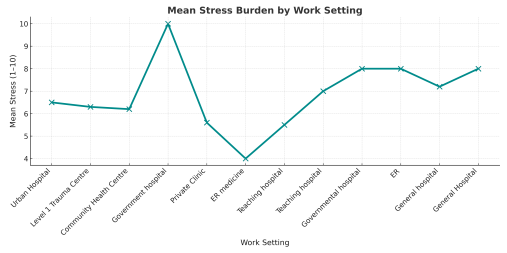
Figure 1 demonstrates that physicians working in urban trauma centers reported significantly higher stress scores compared to those in suburban or rural settings.
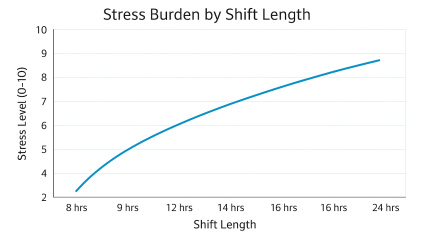
Figure 2 illustrates elevated stress among physicians with more night shifts per month, with a linear increase in stress levels from low to high night shift exposure.
Figure 1. Mean stress burden by work setting.
Figure 2. Stress burden by shift length.
Mean stress levels (0-10) among emergency physicians across different shift durations. Longer shifts were associated with higher average stress levels.
5. Discussion
The validated tool revealed four dimensions of stress response with significant associations to burnout, medical errors, and turnover intentions. The results are consistent with prior studies indicating the direct influence of stress and burnout on clinical decision-making and patient safety
| [6] | Appiani FJ, Rodríguez Cairoli F, Sarotto L, et al. Prevalence of stress, burnout syndrome, anxiety and depression among physicians of a teaching hospital during the COVID-19 pandemic. Arch Argent Pediatr. 2021; 119(5): 317–324. https://doi.org/10.5546/aap.2021.eng.317 |
| [7] | Watson AG, Saggar V, MacDowell C, McCoy JV. Self-reported modifying effects of resilience factors on perceptions of workload, patient outcomes, and burnout in physician-attendees. Psychol Health Med. 2019; 24(10): 1220–1234. https://doi.org/10.1080/13548506.2019.1619785 |
| [15] | Truchot J, Michelet D, Philippon AL, et al. Effect of a specific training intervention with task interruptions on the quality of simulated advanced life support: A randomized multicenter controlled simulation study. Australas Emerg Care. 2023; 26(2): 153–157. https://doi.org/10.1016/j.auec.2022.10.001 |
[6, 7, 15]
. The emotional toll experienced by EPs mirrors findings from the COH-FIT study, which showed global disruption of psychological wellness in health workers during pandemic conditions
| [9] | Solmi M, Estradé A, Thompson T, et al. The collaborative outcomes study on health and functioning during infection times in adults (COH-FIT-Adults): Design and methods of an international online survey targeting physical and mental health effects of the COVID-19 pandemic. J Affect Disord. 2022; 299: 393–407. https://doi.org/10.1016/j.jad.2021.07.048 |
[9]
.
Importantly, the presence of digital stressors-highlighted in recent studies-was evident in open-ended responses from our participants, aligning with Wosny et al. and Bernburg et al. who reported that technological demands can contribute to cognitive overload and job dissatisfaction
| [5] | Wosny M, Strasser LM, Hastings J. Experience of Health Care Professionals Using Digital Tools in the Hospital: Qualitative Systematic Review. JMIR Hum Factors. 2023; 10: e50357. https://doi.org/10.2196/50357 |
| [10] | Bernburg M, Tell A, Groneberg DA, Mache S. Digital stressors and resources perceived by emergency physicians and associations to their digital stress perception, mental health, job satisfaction and work engagement. BMC Emerg Med. 2024; 24(1): 31. https://doi.org/10.1186/s12873-024-00950-x |
[5, 10]
.
Resilience-enhancing strategies such as mindfulness, institutional peer support, and structured coping interventions, like those reviewed by Lynch et al. and Hu et al., should be explored as targeted support mechanisms
| [11] | Lindner M, Leutritz T, Backhaus J, et al. Knowledge Gain and the Impact of Stress in a Fully Immersive Virtual Reality-Based Medical Emergencies Training With Automated Feedback: Randomized Controlled Trial. J Med Internet Res. 2025; 27: e67412. https://doi.org/10.2196/67412 |
| [14] | Hu YY, Fix ML, Hevelone ND, et al. Physicians' needs in coping with emotional stressors: the case for peer support. Arch Surg. 2012; 147(3): 212–217. https://doi.org/10.1001/archsurg.2011.312 |
[11, 14]
. Future studies might focus on the real-time application of our tool to monitor physician stress and predict patient outcome trends.
6. Conclusion
This study provides a validated instrument for assessing emergency p-hysician stress and highlights its clinical implications. Findings support the need for targeted institutional strategies to mitigate stress and improve patient safety.
Interpretation
Results align with international literature showing the mental health toll of emergency work
| [6] | Appiani FJ, Rodríguez Cairoli F, Sarotto L, et al. Prevalence of stress, burnout syndrome, anxiety and depression among physicians of a teaching hospital during the COVID-19 pandemic. Arch Argent Pediatr. 2021; 119(5): 317–324. https://doi.org/10.5546/aap.2021.eng.317 |
| [9] | Solmi M, Estradé A, Thompson T, et al. The collaborative outcomes study on health and functioning during infection times in adults (COH-FIT-Adults): Design and methods of an international online survey targeting physical and mental health effects of the COVID-19 pandemic. J Affect Disord. 2022; 299: 393–407. https://doi.org/10.1016/j.jad.2021.07.048 |
[6, 9]
, and support calls for wellness-based reform
. Digital demands and night shift burden remain actionable targets.
Generalisability
Findings are applicable to similar healthcare systems in urban emergency settings but may vary by institutional resources and culture.
7. Recommendations
1). Implement structured peer support and wellness initiatives
2). Introduce mindfulness or stress reduction training
3). Limit consecutive night shifts
4). Monitor stress through validated tools
5). Foster open dialogue around physician wellbeing
Abbreviations
EPs | Emergency Physicians |
EFA | Exploratory Factor Analysis |
SPSS | Statistical Package for the Social Sciences |
PSS | Perceived Stress Scale |
MBI | Maslach Burnout Inventory |
SD | Standard Deviation |
B | Regression Coefficient |
SE | Standard Error |
Acknowledgments
The authors thank all participating emergency physicians and the hospital administration teams who facilitated the data collection process.
Author Contributions
Omer Faiz Omer Mohamed: Methodology, Project administration, Writing – review & editing
Mohamed Abbas Mudawi Abdalla: Methodology, Project administration, Writing – original draft, Writing – review & editing
Elfadil Shaaeldin Elfadil Yassin: Data curation, Formal Analysis, Software
Elaf Hatim Akasha Mohammed: Data curation, Formal Analysis, Software
Ahmed Altayeb Salih Mohamed Ahmed: Formal Analysis, Supervision, Writing – review & editing
Yusra Raafat Mustafa Abdalmagid: Data curation, Investigation, Writing – review & editing
Elbagir Abuelgasim Elbagir Mustafa: Supervision, Writing – review & editing
Funding
This research received no external funding.
Data Availability
The data supporting the findings are available upon reasonable request from the corresponding author.
Conflicts of Interest
The authors declare no conflicts of interest.
References
| [1] |
Maslach C, Jackson SE, Leiter MP. Maslach Burnout Inventory Manual. 3rd ed. Palo Alto, CA: Consulting Psychologists Press; 1996.
|
| [2] |
Cohen S, Kamarck T, Mermelstein R. A global measure of perceived stress. J Health Soc Behav. 1983; 24(4): 385–396.
https://doi.org/10.2307/2136404
|
| [3] |
Shanafelt TD, Boone S, Tan L, et al. Burnout and satisfaction with work-life balance among US physicians. Arch Intern Med. 2012; 172(18): 1377–1385.
https://doi.org/10.1001/archinternmed.2012.3199
|
| [4] |
Dyrbye LN, Shanafelt TD. Physician burnout: a potential threat to successful health care reform. JAMA. 2011; 305(19): 2009–2010.
https://doi.org/10.1001/jama.2011.652
|
| [5] |
Wosny M, Strasser LM, Hastings J. Experience of Health Care Professionals Using Digital Tools in the Hospital: Qualitative Systematic Review. JMIR Hum Factors. 2023; 10: e50357.
https://doi.org/10.2196/50357
|
| [6] |
Appiani FJ, Rodríguez Cairoli F, Sarotto L, et al. Prevalence of stress, burnout syndrome, anxiety and depression among physicians of a teaching hospital during the COVID-19 pandemic. Arch Argent Pediatr. 2021; 119(5): 317–324.
https://doi.org/10.5546/aap.2021.eng.317
|
| [7] |
Watson AG, Saggar V, MacDowell C, McCoy JV. Self-reported modifying effects of resilience factors on perceptions of workload, patient outcomes, and burnout in physician-attendees. Psychol Health Med. 2019; 24(10): 1220–1234.
https://doi.org/10.1080/13548506.2019.1619785
|
| [8] |
Li Z, Wu M, Zhang X, et al. Interrelationships of stress, burnout, anxiety, depression, quality of life and suicidality among Chinese residents under Standardized Residency Training: a network analysis. Ann Med. 2024; 56(1): 2433030.
https://doi.org/10.1080/07853890.2024.2433030
|
| [9] |
Solmi M, Estradé A, Thompson T, et al. The collaborative outcomes study on health and functioning during infection times in adults (COH-FIT-Adults): Design and methods of an international online survey targeting physical and mental health effects of the COVID-19 pandemic. J Affect Disord. 2022; 299: 393–407.
https://doi.org/10.1016/j.jad.2021.07.048
|
| [10] |
Bernburg M, Tell A, Groneberg DA, Mache S. Digital stressors and resources perceived by emergency physicians and associations to their digital stress perception, mental health, job satisfaction and work engagement. BMC Emerg Med. 2024; 24(1): 31.
https://doi.org/10.1186/s12873-024-00950-x
|
| [11] |
Lindner M, Leutritz T, Backhaus J, et al. Knowledge Gain and the Impact of Stress in a Fully Immersive Virtual Reality-Based Medical Emergencies Training With Automated Feedback: Randomized Controlled Trial. J Med Internet Res. 2025; 27: e67412.
https://doi.org/10.2196/67412
|
| [12] |
Lynch J, Prihodova L, Dunne PJ, et al. Mantra meditation programme for emergency department staff: a qualitative study. BMJ Open. 2018; 8(9): e020685.
https://doi.org/10.1136/bmjopen-2017-020685
|
| [13] |
Mathura P, Pascheto I, Ringrose J, Ramsay G. What about physician wellness? Impact of a quality improvement intervention. BMJ Open Qual. 2025; 14(1): e003078.
https://doi.org/10.1136/bmjoq-2024-003078
|
| [14] |
Hu YY, Fix ML, Hevelone ND, et al. Physicians' needs in coping with emotional stressors: the case for peer support. Arch Surg. 2012; 147(3): 212–217.
https://doi.org/10.1001/archsurg.2011.312
|
| [15] |
Truchot J, Michelet D, Philippon AL, et al. Effect of a specific training intervention with task interruptions on the quality of simulated advanced life support: A randomized multicenter controlled simulation study. Australas Emerg Care. 2023; 26(2): 153–157.
https://doi.org/10.1016/j.auec.2022.10.001
|
| [16] |
Bjørshol CA, Myklebust H, Nilsen KL, et al. Effect of socioemotional stress on the quality of cardiopulmonary resuscitation during advanced life support in a randomized manikin study. Crit Care Med. 2011; 39(2): 300–304.
https://doi.org/10.1097/CCM.0b013e3181ffe100
|
Cite This Article
-
APA Style
Mohamed, O. F. O., Abdalla, M. A. M., Yassin, E. S. E., Mohammed, E. H. A., Ahmed, A. A. S. M., et al. (2025). Emergency Physician Stress and Its Impact on Patient Outcomes: Development and Validation of a Multidimensional Assessment Tool. American Journal of Health Research, 13(6), 308-314. https://doi.org/10.11648/j.ajhr.20251306.13
 Copy
|
Copy
|
 Download
ACS Style
Mohamed, O. F. O.; Abdalla, M. A. M.; Yassin, E. S. E.; Mohammed, E. H. A.; Ahmed, A. A. S. M., et al. Emergency Physician Stress and Its Impact on Patient Outcomes: Development and Validation of a Multidimensional Assessment Tool. Am. J. Health Res. 2025, 13(6), 308-314. doi: 10.11648/j.ajhr.20251306.13
Copy
|
Download
AMA Style
Mohamed OFO, Abdalla MAM, Yassin ESE, Mohammed EHA, Ahmed AASM, et al. Emergency Physician Stress and Its Impact on Patient Outcomes: Development and Validation of a Multidimensional Assessment Tool. Am J Health Res. 2025;13(6):308-314. doi: 10.11648/j.ajhr.20251306.13
Copy
|
Download
-
@article{10.11648/j.ajhr.20251306.13,
  author = {Omer Faiz Omer Mohamed and Mohamed Abbas Mudawi Abdalla and Elfadil Shaaeldin Elfadil Yassin and Elaf Hatim Akasha Mohammed and Ahmed Altayeb Salih Mohamed Ahmed and Yusra Raafat Mustafa Abdalmagid and Elbagir Abuelgasim Elbagir Mustafa},
  title = {Emergency Physician Stress and Its Impact on Patient Outcomes: Development and Validation of a Multidimensional Assessment Tool},
  journal = {American Journal of Health Research},
  volume = {13},
  number = {6},
  pages = {308-314},
  doi = {10.11648/j.ajhr.20251306.13},
  url = {https://doi.org/10.11648/j.ajhr.20251306.13},
  eprint = {https://article.sciencepublishinggroup.com/pdf/10.11648.j.ajhr.20251306.13},
  abstract = {Background: Emergency physicians (EPs) work in unpredictable, high-pressure environments that demand rapid clinical decisions and constant multitasking. Such conditions expose them to significant occupational stress, which, if persistent or unmanaged, can impair judgment, reduce job satisfaction, and increase the likelihood of burnout. Understanding and accurately measuring this stress is essential to improving physician well-being and patient safety. Objective: This study aimed to develop and validate a multidimensional tool to assess stress among emergency physicians and to explore its relationship with key patient-related outcomes. Methods: A cross-sectional study was conducted in Sudan from February to July 2025. A structured, self-administered online questionnaire was distributed to practicing emergency physicians across multiple hospitals. The tool underwent content and construct validation, with exploratory factor analysis used to identify underlying stress domains. Logistic regression was applied to examine associations between overall stress levels and self-reported clinical outcomes, including medical errors and turnover intention. Results: A total of 202 emergency physicians completed the survey. Four primary stress domains were identified: burnout, workload, psychological distress, and system-related stress. Higher composite stress scores were significantly correlated with increased reports of medical errors (p Conclusion: The developed instrument demonstrated strong validity and reliability in assessing multiple aspects of emergency physician stress. Findings highlight that elevated stress levels adversely affect both clinicians and patients. Implementing structured support systems, promoting coping strategies, and enhancing workplace resilience are essential to reduce stress and improve emergency care quality.},
 year = {2025}
}
Copy
|
Download
-
TY  - JOUR
T1  - Emergency Physician Stress and Its Impact on Patient Outcomes: Development and Validation of a Multidimensional Assessment Tool
AU  - Omer Faiz Omer Mohamed
AU  - Mohamed Abbas Mudawi Abdalla
AU  - Elfadil Shaaeldin Elfadil Yassin
AU  - Elaf Hatim Akasha Mohammed
AU  - Ahmed Altayeb Salih Mohamed Ahmed
AU  - Yusra Raafat Mustafa Abdalmagid
AU  - Elbagir Abuelgasim Elbagir Mustafa
Y1  - 2025/11/28
PY  - 2025
N1  - https://doi.org/10.11648/j.ajhr.20251306.13
DO  - 10.11648/j.ajhr.20251306.13
T2  - American Journal of Health Research
JF  - American Journal of Health Research
JO  - American Journal of Health Research
SP  - 308
EP  - 314
PB  - Science Publishing Group
SN  - 2330-8796
UR  - https://doi.org/10.11648/j.ajhr.20251306.13
AB  - Background: Emergency physicians (EPs) work in unpredictable, high-pressure environments that demand rapid clinical decisions and constant multitasking. Such conditions expose them to significant occupational stress, which, if persistent or unmanaged, can impair judgment, reduce job satisfaction, and increase the likelihood of burnout. Understanding and accurately measuring this stress is essential to improving physician well-being and patient safety. Objective: This study aimed to develop and validate a multidimensional tool to assess stress among emergency physicians and to explore its relationship with key patient-related outcomes. Methods: A cross-sectional study was conducted in Sudan from February to July 2025. A structured, self-administered online questionnaire was distributed to practicing emergency physicians across multiple hospitals. The tool underwent content and construct validation, with exploratory factor analysis used to identify underlying stress domains. Logistic regression was applied to examine associations between overall stress levels and self-reported clinical outcomes, including medical errors and turnover intention. Results: A total of 202 emergency physicians completed the survey. Four primary stress domains were identified: burnout, workload, psychological distress, and system-related stress. Higher composite stress scores were significantly correlated with increased reports of medical errors (p Conclusion: The developed instrument demonstrated strong validity and reliability in assessing multiple aspects of emergency physician stress. Findings highlight that elevated stress levels adversely affect both clinicians and patients. Implementing structured support systems, promoting coping strategies, and enhancing workplace resilience are essential to reduce stress and improve emergency care quality.
VL  - 13
IS  - 6
ER  -
Copy
|
Download

 ,
Mohamed Abbas Mudawi Abdalla
,
Mohamed Abbas Mudawi Abdalla


 Share This Article
 Twitter
 Linked In
 Facebook